A blog on the convergence of info-communications industries: communications, computing, electronics, entertainment, publications and education. Strategic, technological and financial analysis. English and French blog. Cette chronique traite de l’évolution des industries de l’information et des communications et couvre des aspects stratégiques, technologiques et financiers, comme l’économie du savoir et de l’innovation. L’auteur est Associé principal de Infocom Intelligence.
Labels
Sunday, October 10, 2010
Consumer internet business models
Tuesday, May 11, 2010
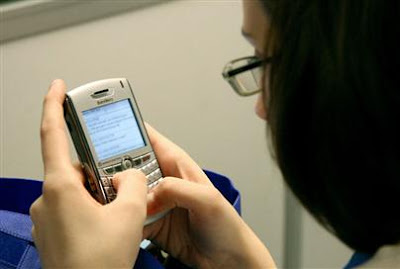
Intelligent use of mobile technology can help you find balance
Read more: http://www.financialpost.com/small-business/business-solutions/story.html?id=2980517#ixzz0ngMfvhMK
Monday, April 12, 2010
Most popular mobile destinations in the US
ComScore, January 2010
Brand
Target Audience
- Total Audience: 13+ yrs old
- 42
- Yahoo!
- 38
- 29.3
- MSN/Windows Live/Bing
- 20.6
- AOL Media Network
- 18.8
- The Weather Channel
- 14.4
- MySpace
- 14
- Operator portals
- 13.6
- ESPN
- 10.4
- CNN
- 10.2
Source: ComScore, January 2010
via: mobiThinking
Sunday, April 11, 2010
Mobile interactive use

When mobile data revenue will take over fixed voice revenue
Mobile data revenue should exceed fixed line revenue around 2011. according to Pyramid Research.Mobile data will be worth US$94 billion in 2014, from US$36 billion in 2008.
Growth will be fueled by Asia-Pacific particularly, which by 2013 will account for 43.9 percent of subscribers, followed by Europe (25.0 percent), Africa and Middle East (12.2 percent), Latin America (11.2 percent) and North America (7.6 percent).
Over the next five years and beyond, Asia will account for half the world’s mobile subscribers and half the handset sales.
-Advertising expenditure on mobile Internet will overtake spending on SMS marketing in 2009;
-Global spending on mobile Internet advertising will be US$500 million in 2009; total value of marketing spend on mobile is US$1.4bn;
-Mobile ads revenue will be US$2bn by 2014; total value of marketing spend on mobile is US $6bn in 2014;
-Where fixed Internet access is limited, mobile is the dominant means of accessing the Internet: in India, mobile accounted for nearly 90 percent of all Internet users in 2008;
-Visitor numbers to popular mobile Internet sites makes strong case for advertising and sponsorship options;
-Brands can build up much more detailed profiles of user responses and plan follow up campaigns accordingly, compared to online.
• 75 percent of all Canadian households have a mobile phone.
• 50 percent of phone connections in Canada are wireless.
• Canadians send 100 million text messages per day.
• 21 percent of mobile consumers (or 4 million Canadians) use their mobile phones to browse the Web (Nielsen Online, June 2009).
• 53 percent of mobile users have an Internet-ready device, (Sympatico.ca [Bell Canada] survey, September 2009).
The growth of mobile Web in the Canada, in common with mobile markets around the globe, is driven by:
• The speed that operators rollout better data networks and consumer-friendly data plans.
• Consumer adoption of phones that make accessing the Internet easier and a more rewarding experience.
• Availability of more compelling content and services that meet consumer needs.
• Made-for-mobile Websites that are optimized to deliver a high-quality consumer experience.
• The popularity of downloading applications from app stores.
The driving force behind innovation and investment has been competition in the wireless industry and it is essential that investment continues. As wireless is a proven catalyst for stimulating economic growth, private and public organizations should be encouraged to step-up investment in the wireless infrastructure that underpins essential community services such as tele-learning in rural schools, linking local healthcare providers with remote life-saving applications or ensuring that all citizens have high-speed Internet access.
The pioneers were the mobile-content providers – i.e. those offering ringtones, games and other paid-for services.
Consumer-facing brands in financial services, travel, entertainment, automotive, retail and food and beverage have also been quick to see the potential of mobile marketing.
According to Amielle Lake, CEO of mobile marketing company Tagga Media, there has been a lot of success stories among food and beverage brands such as Coors Light, Global Restaurants and Old Dutch Foods.
At Sympatico.ca Mobile, which lays claim to the largest mobile advertising network, Brad Cressman, head of sales and marketing explains: "Sympatico focuses on brand advertisers, rather than content advertisers (ring tones, downloads etc…) and has found that success with mobile advertising follows a similar pattern to online with top-tier brands in the top-spending categories. The auto market has been very active, particularly Acura, Lexus and GM for example. One of the greatest benefits of mobile is the ability to combine brand advertising with customer engagement – brands like Starbucks, McDonald’s and Axe (Unilever) have followed this strategy.
For Brady Murphy, managing partner of mobile agency Vortex Mobile(mobile site: vortexmobile.mobi, three companies stand out particularly as mobile innovators in Canada:
• Scotiabank (Canada's third largest bank) uses mobile Web, applications and SMS for both marketing and m-banking and is very bullish about gaining first-mover advantage.
• LoyaltyOne (the Canadian company behind Air Miles) – Murphy believes loyalty/rewards companies hold the key to unlocking mobile couponing and offers (among many other things).
• Dell Canada (mobile site: dellcanada.mobi), which uses SMS and mobile-friendly emails that link to an m-commerce site that is attracting an increasing number of transactions.
• In Canada, SMS is still remains the most prominent tool for interaction, but over the past year brands have been increasingly investing in mobile-friendly sites and apps.
• The trend in recent years has been towards integrating mobile into overall marketing strategy at much earlier stages in the planning process. Mobile is most effective when integrated into cross-media initiatives – such as adding a mobile call to action to a bill-board campaign.
• Brand campaigns are normally run at a national level, but mobile is also used local as part of regional radio, TV and print campaigns.
• The most popular mobile destinations in Canada in Q1 2009: Windows Live Mail (1.4 million unique visitors); Google Search; Facebook; The Weather Network and Yahoo! Mail. (Nielsen Online, June 2009).
• Top categories accessed via the mobile Web include: portals, e-mail, weather, news and current affairs and search (Nielsen Online, June 2009).
• Mobile sites of famous Canadian brands include
News: Canwest/Canada.com; Toronto Star; National Post; Ottawa Herald; Globe and Mail ; Quebecor Media; Metro;
Broadcast and entertainment: CBC; CTV; The Score; Slice;EmpireTheatres.mobi; Cineplex;
Travel: WestJet; Air Canada; Canadian Tourism Commission (CTC);lakelouise.mobi; whistler.mobi; banff.mobi;
Government: Government of Canada;
Banks: Royal Banking Corporation (RBC).
Olympics: The official Vancouver 2010 mobile site
(source: YesWap.mobi/WapReview.mobi).
a) mobile/creative agencies
Mobile agencies have played a strong role in bringing mobile marketing to brands. Promotions companies like LPI and 6S marketing (mobile site:6SMarketing.mobi; and interactive companies like Carlson, BStreet,Proximity and Cossette have adopted mobile well and dedicated themselves to educating their brands on the best tactics to harness mobile.
“All the big Internet publishers and traditional creative agencies are dabbling in mobile, but as with every new medium, it’s the mobile-specific agencies that are going the deepest, like Vortex Mobile and Polar Mobile,” explains Andrew Osmak, senior vice president of Canadian Internet/mobile dating agency Lavalife.
b) Mobile advertising networks
Sympatico.ca Mobile claims to be the largest mobile advertising network in Canada, but many of the US-based networks also have a presence.
c) Network operators
The latest subscriber figures from CWTA for Canadian mobile operators are:
Rogers Wireless – 8.3 million subscribers (the mobile site: Rogers.mobi is only for subscribers); Bell Wireless – 6.7 million (Bell.mobi), TELUS Mobility – 6.4 million (Telus.mobi), SaskTel Mobility – 0.5 million, MTS Mobility – 0.5 million.
d) Associations
From an industry-association prospective, the most effective mobile marketing groups are Mobile Mondays Vancouver and Mobile Mondays Toronto),CWTA, Digital Media and Wireless Association of BC (DigiBC), and theMMA.
Mobile marketers report that there are three basic dynamics that differentiate Canada from its counterparts. These are:
• Cost – Canada remains one of the most expensive countries in the world for consumers to own cell-phones. There remains little price competition between the five carriers. The high prices mean consumers are reserved when it comes to engaging in any mobile marketing initiatives, just in case it may prove costly.
• Scale – While the majority of Canadians have mobile phones, the percentage that have interacted with mobile marketing campaigns is still quite small, which restricts the reach for mobile advertisers. But this is expected to change rapidly.
Wednesday, March 24, 2010
À quoi va servir un iPad?

Thursday, March 18, 2010
The future of venture capital

Venture Capitalist Mike Maples gave a talk last month at the Future of funding event in Silicon Valley. He made an intrestesting point in the fact that it is not always the biggest VC fund raising startup that become successful. Microsoft raised only $1M in VC funds before they became public. EBay more recently raised only $5M in VC funds. However, both firms worth now several billions and the VC firms made huge homeruns exit strategies.
Mr. Maples pinpointed on the importance of identifying what he calls "Thunder lizards", potential disruptive market leader. A perfect situation, is when there is no real competition out there getting funded. He calls this being “non consensus right.” That’s the sweet spot for him. The key is to attack a huge potential market, with an emphasis on “potential.” You want to be right, and you want to be one of the only people to see it ahead of time.
It appears that 9% of the funds of VC firms creates 91% of their overall profits. The same is true with Research & Development. Generally, 10% of patents in a firm creates 90% of the value of the firms.
You can see his whole presentation in the comment before this one.
Louis Rhéaume
Infocom Intelligence
louis75@sympatico.ca
Sunday, March 14, 2010
Nouveau répertoire / New index
La rentabilité de la dépendance technologique

Gartner prévoit qu'il se vendra d'ici 2ans plus de téléphones intelligents que de PC à travers le monde. Ceci veut dire qu'il y aura plus de nouveaux utilisateurs d'internet mobile que fixe dans le monde. Les nouvelles technologies créent souvent chez plusieurs personnes une sorte de dépendance. On n'a qu'à penser aux années de gloire de la radio dans les années 40 et 50, du téléphone fixe depuis des décennies, de la télévision dans les années 60 et 70. Une nouvelle technologie créent un engouement dans la société qui vient à son tour créer une certaine dépendance chez certaines personnes.